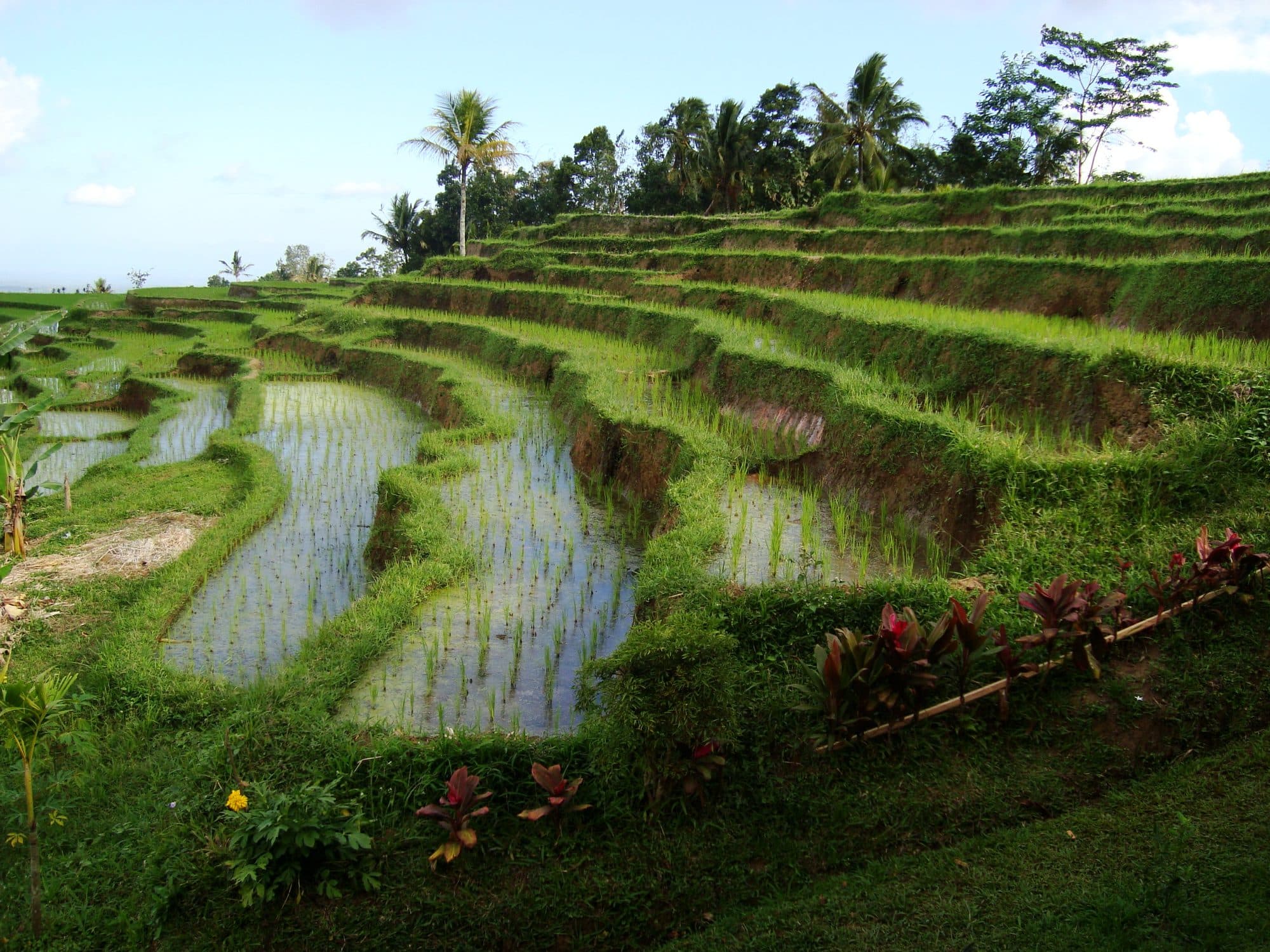
How to tell whether a holiday listing still exists
TLDR
- •Across 1,621 venue websites checked, failure rates ran from 6 to 41 per cent by destination
- •In Bali, two links in five pointed at something gone, parked or selling slot machines
- •13 former Bali tourism domains now serve online gambling sites, and the same kind of operator turned up in Sri Lanka and Morocco
- •A dead link tells you it is dead; a hijacked one does not
- •Third-party opening hours were the least reliable category of information we tested
Everything below comes from work we did for our own guidebooks. We built venue lists from mapped open data, then opened and read every candidate's own website one at a time, recording the date. Across eight destinations that came to 2,879 sites.
The failure rates were not what we expected, and they varied enormously by place.
What we measured
| Destination | Candidates checked | Dead or repurposed |
|---|---|---|
| Tuscany | 27 | 6 per cent |
| Amalfi Coast | 20 | 25 per cent |
| Marrakech and the Atlas | 107 | 28 per cent |
| Mallorca | 726 | 29 per cent |
| Algarve and Comporta | 532 | 30 per cent |
| Sri Lanka | 356 | 32 per cent |
| Bali | 905 | 41 per cent |
Sites that merely blocked an automated request were excluded from those counts, because a bot defence is not a dead business and counting it as one would flatter the method.
Then we did the Mani, in southern Greece, and the measurement stopped making sense. The peninsula has 206 mapped eating and drinking places and 17 websites between them. The question there is not what proportion had died. It is that 92 per cent never published anything in the first place.
The three failure modes, in order of how much damage they do
Dead. The domain does not resolve. Annoying, and harmless, because it announces itself.
Repurposed. Somebody else owns the domain now, and this is not occasional. In Bali we found 13 former tourism domains serving online gambling sites: restaurants, hotels and hostels whose addresses now return Indonesian slot and sports-betting affiliates, plus one Dutch casino and one Czech one. In Sri Lanka, six former hotel and restaurant domains had become gambling or celebrity-scandal sites. In Morocco, one restaurant's own domain was serving an Indonesian gambling site.
Three destinations on three continents, and repeatedly the same kind of operator. This is a business model rather than a coincidence: an expired tourism domain carries aged inbound links from travel sites, guides and directories, and that link equity is worth buying. Online gambling is illegal in Indonesia, which is presumably why the sites sit on foreign-registered domains that used to belong to somebody else's restaurant.
Compromised. This is the dangerous one. In the Mani we found a bakery, trading on a claim of continuous operation since 1890, whose site returns a clean page with its own branding intact: the right name, the right products, the right photographs. Sitting in the same homepage HTML were 34 instances of the Greek word for casino, in gambling affiliate copy, with an outbound link to an operator.
The site was not abandoned and the domain was not sold. It was compromised, and the sentences that look like the business talking are interleaved with sentences that are not. A page that looks normal is not evidence that it is.
The near-miss, which is worse than a dead link
While researching the same region we tried to resolve venues by guessing their domains. Greek business names are generic and they collide nationally. The obvious domains returned an Italian pharmaceutical laboratory, a Croatian architecture portal, a hotel on a different island and an investment company. Every one of those is a real business with a real, functioning website.
There was also a cafe whose third-party listing published a website that does not resolve, while a very similarly named live domain belonged to a completely different company.
The reader who guesses lands on somebody else's business and has no way of knowing.
Five checks that catch most of it
1. Find the site from the business, not the business from the site. A listing's link is a lead. Confirm it against a phone call, a map entry, or a social account the business obviously runs. 2. Read a page that is not the homepage. Compromised sites are often injected on some pages and not others. The menu, the contact page and the news page are where it shows. 3. Check the copyright year and whether anything has been updated. Not conclusive, but a 2019 copyright on a hotel is worth a phone call. 4. Distrust third-party opening hours completely. Across everything we tested, this was the least reliable category of information. During Tuscany research, a mapped listing showed a Chianti restaurant open through the winter when its own site says it shuts from December to February. 5. Telephone. Especially anywhere rural. In the Mani it is not the fallback, it is the entire system, because for most businesses there is nothing else.
And then we found somebody selling it
For four books we argued that expired tourism domains get bought for their inbound links, and we could only ever show the result. Somebody's restaurant becomes a slot-machine site, and you infer why.
On Mallorca we found the why, advertised.
A former Palma cheese shop's web address now serves a domain broker's sales page. In the broker's own words:
"A short, memorable, established domain ready to power your grocery store brand."
"Backed by 49 referring domains and 13 years of online authority."
"Demand signals indicate strong ranking potential out of the box."
That is 49 referring domains. Every guide that ever linked to that cheese shop, every listings site, every blog post someone wrote about a good week in Palma. All of it is now an asset on a broker's inventory with a price on it.
The operator who buys it is not buying a website. They are buying trust that other people built and pointed at a shop that closed.
A third thing that is not a takeover
Mallorca also showed us a category we had been folding into the others, wrongly.
A ramen chain on the island is open, trading and perfectly good. Its own website footer, under its copyright line, carries an injected link to an online casino. The company still owns the domain. The site has been compromised.
That needs the opposite advice from a takeover. The venue is real and worth going to. The link is not safe. If we had counted it as a dead business we would have libelled a trading restaurant, and if we had ignored the flag we would have sent you to a compromised page.
The uncomfortable conclusion
The failure rate is a property of the destination, not of your carefulness, and it does not track how developed a place is. Bali is heavily mapped, heavily commercial and comprehensively online, and it had the worst rate we have measured.
What it tracks is business size. In Bali the failure rate ran at 61 per cent for hostels, 50 for cafes, 49 for guest houses, 42 for restaurants and 36 for hotels. By region it barely moved at all. Small independent businesses churn, their domains lapse, and somebody is waiting to buy them.
So the practical rule is the opposite of the intuitive one. The smaller and more interesting the place you are trying to book, the less you should trust the link.
Frequently Asked Questions
How common are fake holiday listings?
Outright fraud is rarer than decay. Across the several hundred venue websites we opened and read, the overwhelming majority of failures were businesses that had closed, domains that had lapsed and been bought by someone else, or sites that had been compromised. All three leave a listing that looks fine from the outside.
Is a website that loads proof a business is still trading?
No. We found a site returning a clean page with the business's own branding intact while carrying injected gambling affiliate content in the same HTML. Loading proves the domain resolves and nothing else.
What is the single most reliable check?
Telephoning. It is old-fashioned and it settles in 30 seconds what an hour of reading cannot. In rural destinations it is often the only method that works at all.
Ready to browse?
Read the destination guides for bali and tuscany and amalfi coast and marrakech atlas.